
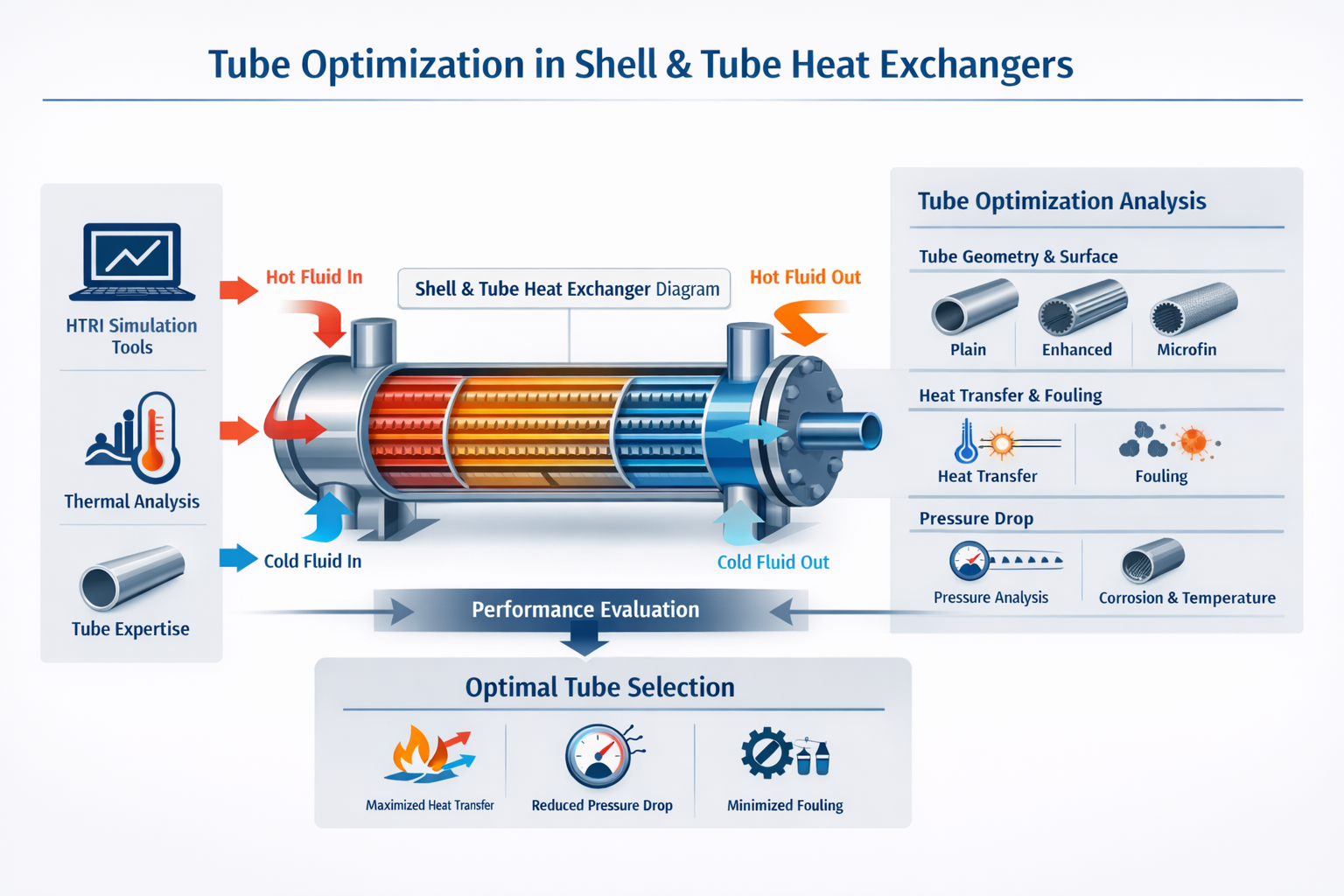
Optimize Your Shell & Tube Heat Exchanger Design
Enhanced Surface Tubing and NEOTISS Heat Transfer Expertise
NEOTISS provides heat transfer expertise and tube optimization services to help identify the most efficient tube solution for a given shell & tube heat exchanger configuration and operating environment.
We carry out complete techno-economic studies to help customers achieve the best total cost of ownership.
Using advanced heat transfer modelling, engineering analysis, thermal simulations and proprietary data, our teams assess how different tube technologies affect heat exchanger performance. This approach allows EPC contractors, heat exchanger fabricators and OEMs to select the optimal tube design to maximize heat transfer efficiency while respecting hydraulic constraints and process conditions.
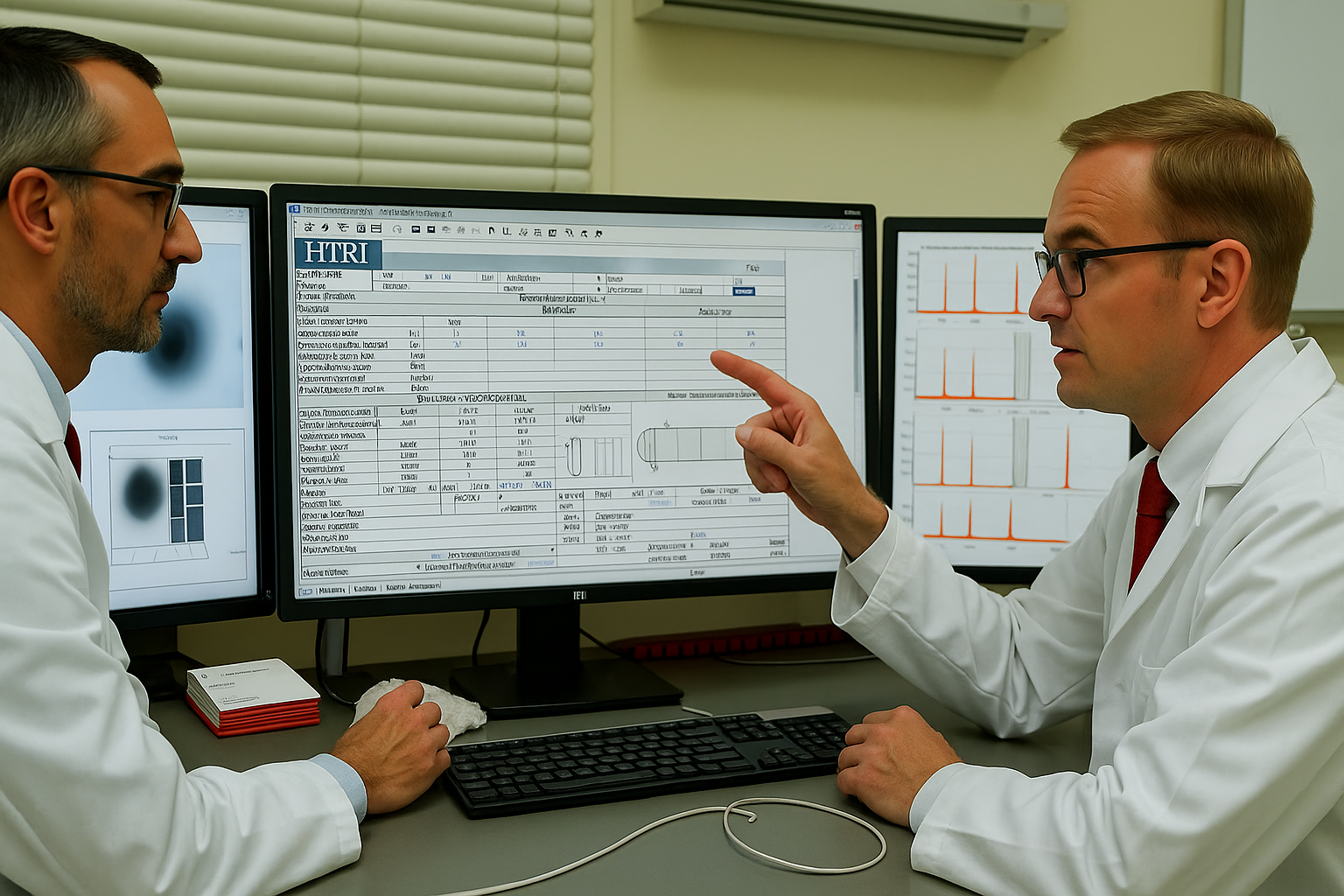
Heat Transfer Expertise for Shell & Tube Heat ExchangersOptimizing the performance of shell & tube heat exchangers requires a detailed understanding of heat transfer mechanisms, fluid dynamics and fouling behaviour. NEOTISS combines precision tube manufacturing expertise with advanced heat transfer engineering to support exchanger designers during the tube selection phase. Our engineering teams evaluate how tube geometry, materials and surface characteristics influence the thermal behaviour of the exchanger. This expertise enables engineers to better understand how tube technologies impact heat transfer efficiency, pressure drop and operational performance. Through this technical support, NEOTISS helps engineering teams integrate high-performance tube technologies into their shell & tube heat exchanger designs. HTRI Thermal SimulationsUsing HTRI software dedicated to shell & tube heat exchangers, our engineers perform detailed thermal simulations to evaluate the impact of different tube technologies on exchanger performance. These simulations allow us to analyse:
By combining HTRI simulation capabilities with NEOTISS expertise in precision tube technologies, we provide engineering teams with data-driven insights to support optimal tube selection. |
 |
Tube Optimization MethodologySelecting the optimal tube technology requires evaluating multiple interacting parameters that influence heat exchanger performance, such as:
Through advanced engineering analysis and thermal modelling, NEOTISS evaluates how these parameters influence heat transfer efficiency, hydraulic performance and fouling behaviour. |
 |
Benefits for EPCs, Fabricators and OEMs
Optimizing tube selection within shell & tube heat exchangers can significantly improve thermal system performance.
NEOTISS engineering support helps customers:
- Maximize the overall heat transfer coefficient (U)
- Improve heat exchanger thermal efficiency
- Manage pressure drop limitations
- Reduce fouling sensitivity
- Improve exchanger operational reliability and lifetime
- Debottleneck existing heat exchangers with new tubes or a new bundle without changing shell size or piping layout
Industries and Applications
NEOTISS tube optimization expertise supports heat exchanger projects across a wide range of industries, including:
- Nuclear power generation
- Fossil and geothermal power generation
- Air conditioning, heating, refrigeration, HVAC and industrial thermal systems
- Refining, including biofuel applications
- Chemical and petrochemical processing
- Hydrogen production and carbon capture processing
These industries rely on high-performance shell & tube heat exchangers to ensure efficient thermal management in demanding operating environments.
FAQ – Tube Optimization for Shell & Tube Heat Exchangers
Why is tube selection important in shell & tube heat exchangers?
Tube geometry and materials directly influence heat transfer efficiency, pressure drop and fouling behaviour, which are critical parameters in heat exchanger performance.
How does a fin tube increase heat exchanger efficiency?
Generally, by increasing the surface available for heat transfer on the shell side and increasing turbulence on the tube side. Each case is specific and should be studied carefully.
What parameters influence heat transfer in heat exchanger tubes?
Key parameters include tube diameter, wall thickness, surface characteristics, tube material properties, fluid properties, process conditions, temperature, pressure, fluid velocity and fouling behaviour.
Can tube optimization improve an existing heat exchanger?
Yes. By adding additional surface area within an existing shell size, and in some cases making more efficient use of available pressure drop, performance can be improved through changes in tube type and bundle design.
When should I consider low-fin tubing?
See NEOTISS Technical Bulletin No. 2: View the Bulletin
Can I safely use low-fin tube in a fouling environment?
See NEOTISS Technical Bulletin No. 1: View the Bulletin
Can I safely use inner grooved tube in cooling water service or other tube-side fouling environments?
See NEOTISS Technical Bulletin No. 3: View the Bulletin
Can changing the tube type improve performance without redesigning the exchanger?
In some cases, yes. Performance can be improved by adding more surface area, changing the thermal conductivity of the material, optimizing wall thickness or modifying the tube ID. However, pressure drop and acoustic vibration must always be checked carefully.
Unlock the Full Potential of Your Thermal Systems
Partner with NEOTISS to benefit from heat transfer engineering expertise and precision tube technologies optimized for shell & tube heat exchangers.
Contact our heat transfer experts to evaluate the optimal tube solution for your shell & tube heat exchanger.
Schedule a Meeting with Our Experts
Choose the right contact below to schedule a meeting with our heat transfer engineering team.
Contact US Engineer Contact EUR Engineer Contact NTC Engineer